
The pH Balancing Act in Mycorrhiza: How to Maintain Optimal pH for Maximum Effectiveness
Why pH Matters More Than You Think?
In today’s shift toward sustainable agriculture, mycorrhiza biofertilizers are playing a vital role in improving soil health and crop productivity. However, one critical factor that often goes unnoticed is pH stability.
For Glomus species—the most widely used arbuscular mycorrhizal fungi—pH directly impacts:
- Spore viability
- Root colonization
- Nutrient uptake efficiency
- Shelf life of the product
This is why India’s FCO standards for biofertilizers clearly define a specific pH range for commercial products. Simply put, if the pH is not right, the performance of even the best formulation can decline.
Understanding the Role of pH in Mycorrhiza
The success of mycorrhizal biofertilizers depends largely on the development of the extraradical mycelium—the fungal network responsible for nutrient absorption.
When the pH is within the ideal range for mycorrhiza growth, the fungus actively expands this network, improving the plant’s access to phosphorus and micronutrients. However, under low pH conditions, this growth is restricted, reducing the overall effectiveness of the biofertilizer.
In simple terms, pH determines whether the fungus just survives—or truly performs.
Why pH is Not Constant?
One of the biggest challenges in maintaining biofertilizer pH stability is that pH keeps changing at different stages—from production to field application.
1. Fungal Nutrient Uptake
The fungus actively modifies its local pH depending on the form of nitrogen available. When supplied with nitrate, the extraradical hyphae of Glomus intraradices strongly increased the pH of the medium. This occurs because the fungus takes up nitrate through a mechanism coupled with proton (H⁺) co-transport, effectively removing acid from its surroundings and causing the pH to rise.
In contrast, when nitrogen sources differ, the pH may decrease.
This nutrient-driven pH adjustment is a physiological adaptation: the fungus changes its local chemistry to optimize nutrient capture. This natural response helps optimize nutrient absorption, but it also leads to pH fluctuations within the system.
2. pH Shift in ROC During Manufacturing: Why It Matters
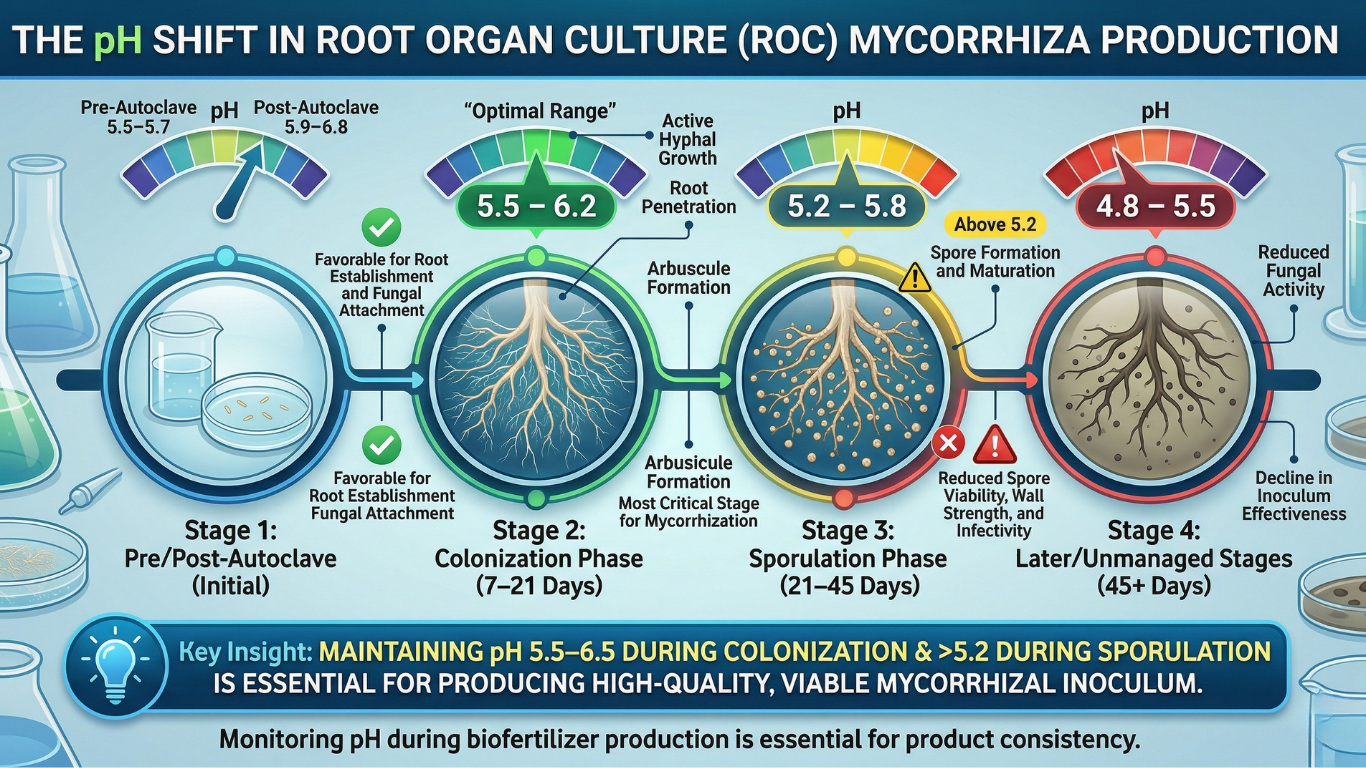
In Root Organ Culture (ROC)-based mycorrhiza production, pH does not remain constant—it shifts at every stage due to media chemistry, root metabolism, and fungal activity. These changes directly influence mycorrhization efficiency, fungal viability, and sporulation capacity.
The process typically begins with a pre-autoclave pH of 5.5–5.7, which increases to around 5.9–6.8 after autoclaving due to heat-induced chemical reactions. This slightly higher pH is generally favorable for initial root establishment and fungal attachment.
During the active colonization phase (7–21 days), pH gradually declines to 5.5–6.2 as roots and fungi release organic acids. This range is considered optimal for hyphal growth, root penetration, and arbuscule formation, making it the most critical stage for effective mycorrhization.
As the culture progresses into the sporulation phase (21–45 days), pH further drops to 5.2–5.8, which supports spore formation and maturation. However, if pH falls below 5.0, it can negatively impact spore viability, wall strength, and infectivity, ultimately reducing product quality.
In later stages, unmanaged cultures may reach pH 4.8–5.5, leading to reduced fungal activity and decline in inoculum effectiveness.
Key Insight:
Maintaining pH within the range of 5.5–6.5 during colonization and above 5.2 during sporulation is essential for producing high-quality, viable mycorrhizal inoculum in ROC systems
This is why monitoring pH changes during biofertilizer production is essential for maintaining product consistency.
3. Soil and Root Interaction
Once applied to the field, the fungus interacts with plant roots, which release organic acids and other compounds. Research on coffee seedlings showed that mycorrhizae induced a higher pH, a lower exchangeable acidity, and higher values of exchangeable cations in the rhizosphere. This creates a feedback loop where the fungus modifies pH, which influences root activity, which in turn affects the fungus.
This interaction is key to the success of mycorrhiza in sustainable agriculture.
Choosing the Right Carrier for pH Stability
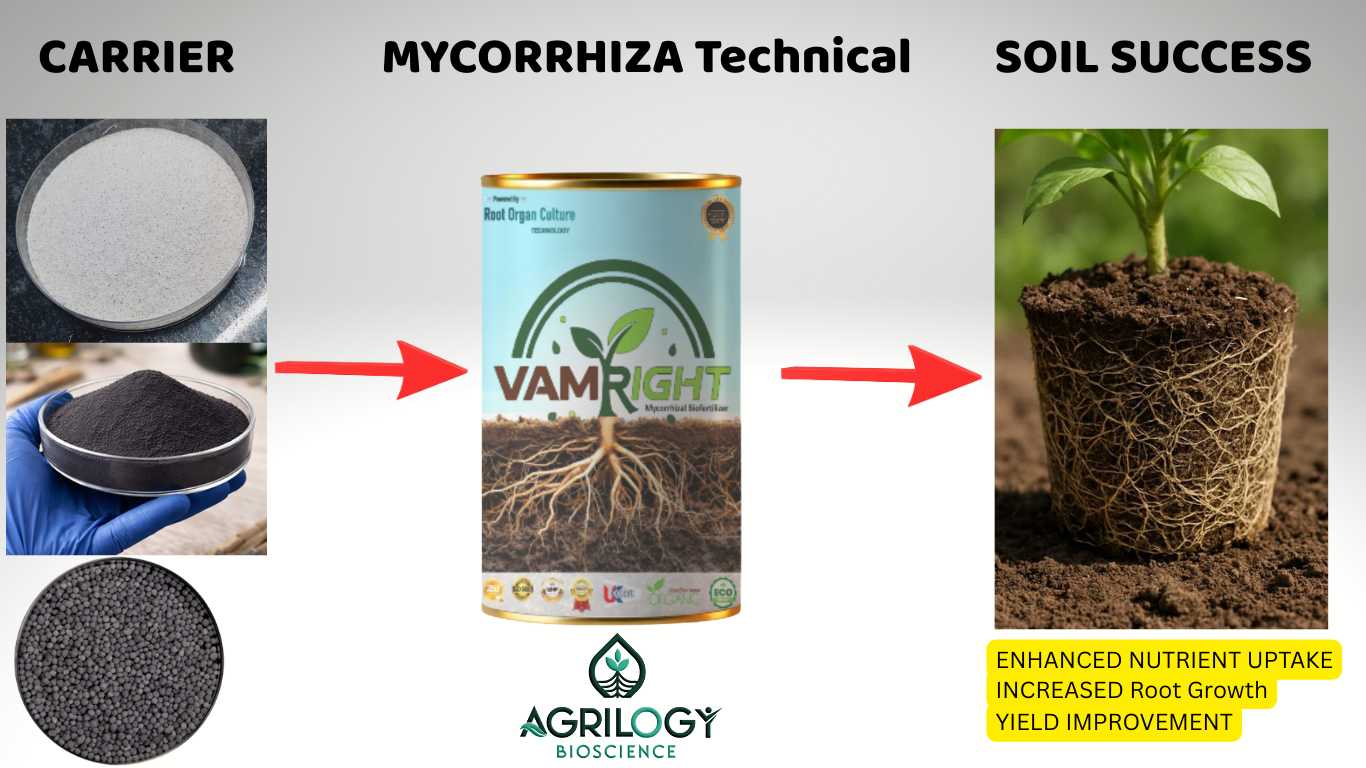
The carrier material—the physical matrix that houses the fungal propagules—significantly influences pH stability. Different carriers have different buffering capacities, meaning they vary in their ability to resist pH changes. An ideal carrier should not only buffer pH but also support microbial life and ensure effective delivery to plant roots.
- Clay-based carriers (Bentonite):Offer high buffering capacity and excellent pH stability. Their strong adsorption properties help resist pH fluctuations, making them one of the best carriers for mycorrhiza biofertilizer with longer shelf life.
- Peat-based carriers:Widely used but more prone to pH drift due to ongoing microbial activity and organic matter decomposition, which can gradually acidify the system.
- Vermiculite-based carriers:Provide good aeration and structure but have moderate buffering capacity. They are sensitive to processing conditions, especially autoclaving, which can cause noticeable pH shifts.
- Humic substance-based carriers (Humic acid / Potassium humate):Primarily act as protectants rather than structural carriers. They improve microbial survival under stress (temperature, drying, chemical exposure) and enhance formulation stability. However, their behavior is pH-dependent, as changes in pH alter their molecular structure, affecting their protective efficiency and colloidal stability.
- Dextrose-based carriers:Serve as a readily available energy source for the fungus rather than a buffering system. They support early microbial activation after application. These formulations are typically maintained within a pH range of 6.0–7.5, aligning well with optimal conditions for mycorrhizal activity, but require careful control as they offer limited pH buffering.
Key Insight:
While clay-based carriers provide the best pH stability, functional additives like humic substances and dextrose enhance microbial survival and activity. The most effective formulations often combine structural stability with biological support components.
Formulation Type and Its Impact on pH
The physical formulation of the product also affects pH stability. Four basic dispersal types are commonly produced: powder, granule, slurry, and liquid.
Powder Formulation
Powders provide quick root contact due to their fine particle size, but they are more sensitive to environmental changes and moisture, making them prone to pH drift.
Granular Formulation
Granules offer better protection to fungal propagules. Their larger size slows down chemical diffusion, helping maintain stable pH and improving shelf life.
Liquid Formulation
Traditional liquid formulations often have a shorter shelf life due to water-based instability. However, modern non-aqueous systems have significantly improved stability, reducing contamination risks and maintaining consistent pH over longer periods.
This is why formulation choice is critical for biofertilizer stability and performance.
Field Performance: What pH Range Actually Works?
After all the production and formulation considerations, the ultimate test is field performance. The available evidence indicates that Glomus species are adaptable across a wide soil pH range.
A glasshouse experiment examining Glomus fasciculatum across soil pH levels from 5.3 to 7.5 found that the fungus infected extensively at every level tested. However, the same study noted that total AM root colonization decreased at higher pH, and high pH also reduced arbuscule and vesicle formation. Different Glomus species also exhibit different pH optima for spore germination.
For most agricultural applications, a product pH in the 5.5–7.5 range will perform adequately in the field. However, for maximum functional benefit—particularly phosphorus acquisition—the evidence suggests a preference for the higher end of this range, where extraradical mycelium development is most robust.
Key Insights:
Functional range: 5.3 to 7.5 and Optimal range: 6.5 to 7.0
At higher pH levels, mycelial growth improves, enhancing nutrient uptake. However, extremely high pH can reduce the formation of important fungal structures.
Maintaining the ideal soil pH for mycorrhiza ensures consistent agricultural results.
The FCO Standard: pH 5.0–7.0 is it justified?
Yes. The Fertilizer Control Order (FCO) requirement of pH 6.5–7.0 for carrier-based products (and pH 5–7 for liquids) is supported by multiple lines of evidence.
- Spore germination: Research shows Glomus germinates best at pH 7, with maximum germination at this level.
- Fungal function: The Van Aarle study found that extraradical mycelium development – essential for nutrient and water uptake – is greater at higher pH.
- Species range: Different Glomus species have varying pH optima; the 6.5–7.0 range is a practical compromise that supports most commercially relevant species.
- Manufacturing reality: Autoclaving can shift pH significantly. Targeting 6.5–7.0 provides a buffer against drift during processing and storage.
- Liquid flexibility: The wider pH 5–7 range for liquid formulations acknowledges that non‑aqueous carriers have different chemistry and optimal ranges than solid carriers.
In short, the FCO standard aligns with both fungal biology and practical production constraints.
Key Takeaways for Better Results
To ensure maximum effectiveness of mycorrhiza biofertilizers, keep these points in mind:
- Maintain pH close to neutral (6.5–7.0)
- Choose clay-based carriers for better stability
- Prefer granular or advanced liquid formulations
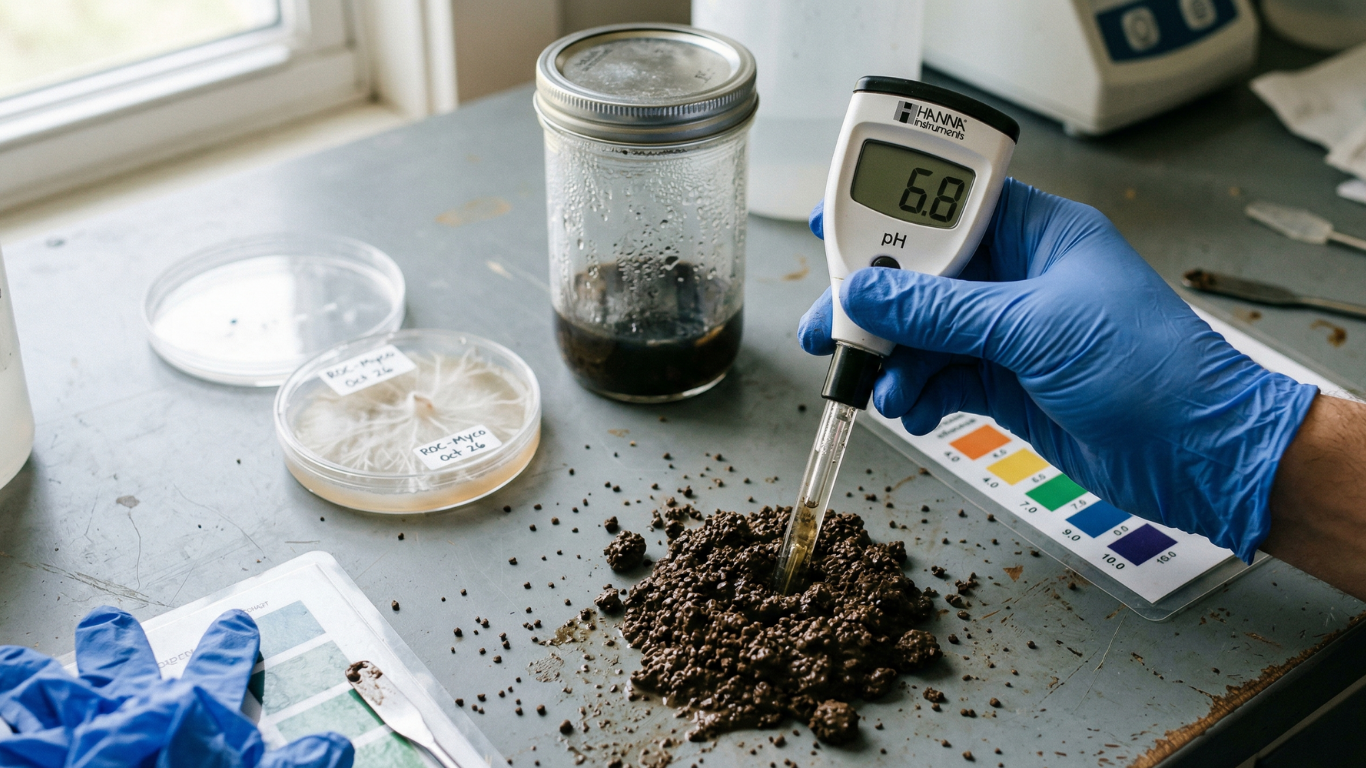
- Monitor pH during production and storage
- Ensure compliance with FCO standards
Conclusion: pH is the Foundation of Performance
pH is not just a number on a specification sheet—it is the foundation of how effectively mycorrhiza biofertilizers work.
From production to field application, maintaining the correct pH ensures:
- Strong fungal growth
- Effective root colonization
- Improved nutrient uptake
- Better crop performance
For anyone involved in agriculture—whether manufacturer, agronomist, or farmer—understanding and maintaining the optimal pH for mycorrhiza is essential for achieving the best results.
Mastering Mycorrhiza Technical: The Science of Carriers, Spores & Soil Success
Why Carrier Selection and Formulation Integrity Determine Field Success?
What if the key to reducing phosphate fertilizer dependency wasn't a new chemical discovery, but rather the optimized formulation of a 450-million-year-old biological partnership? Endomycorrhizal fungi (VAM) offer this exact promise—but only when technical specifications align with agricultural realities.
The difference between VAM as a concept and VAM as an effective agricultural input lies in the precise science of carriers, spore viability, and formulation integrity that determines whether these microscopic allies survive storage, application, and establishment in competitive soil environments.
This gap—between the biological potential of mycorrhiza and its real-world agronomic performance—is where formulation science becomes not just relevant, but essential.
What Is Endomycorrhiza (VAM)?
Imagine a natural, microscopic network that acts as a root extension, reaching far into the soil where roots cannot go. That's VAM. These fungi form intricate structures inside the root cells (vesicles for storage, arbuscules for nutrient exchange) and extend their hyphae outward, effectively increasing the root absorption area by up to a hundred times.
Their primary role? To facilitate the uptake of phosphorus, water, and other immobile nutrients, while the plant provides them with carbohydrates. It's a perfect, ancient partnership.
But in the lab, this partnership is a promise. In the field, it’s a challenge. VAM as a concept is robust. VAM as an input is fragile—until it’s strategically formulated.
The Formulation Bridge: From Concept to Crop
A high-quality spore alone is not a product. It’s a living organism that must endure:
- Storage – often for months, in variable temperatures
- Mixing – with fertilizers, pesticides, or other inputs
- Application – through seed treaters, sprayers, or granular spreaders
- Establishment – in soils that may be chemically imbalanced, dry, or microbiologically competitive
This journey is where carrier science makes or breaks the investment.
The Crucial Role of Carriers: More Than Just a Delivery System
In technical VAM formulations, the carrier is not inert filler. It’s a viability engine, a protective habitat, and sometimes, a synergistic soil amendment.
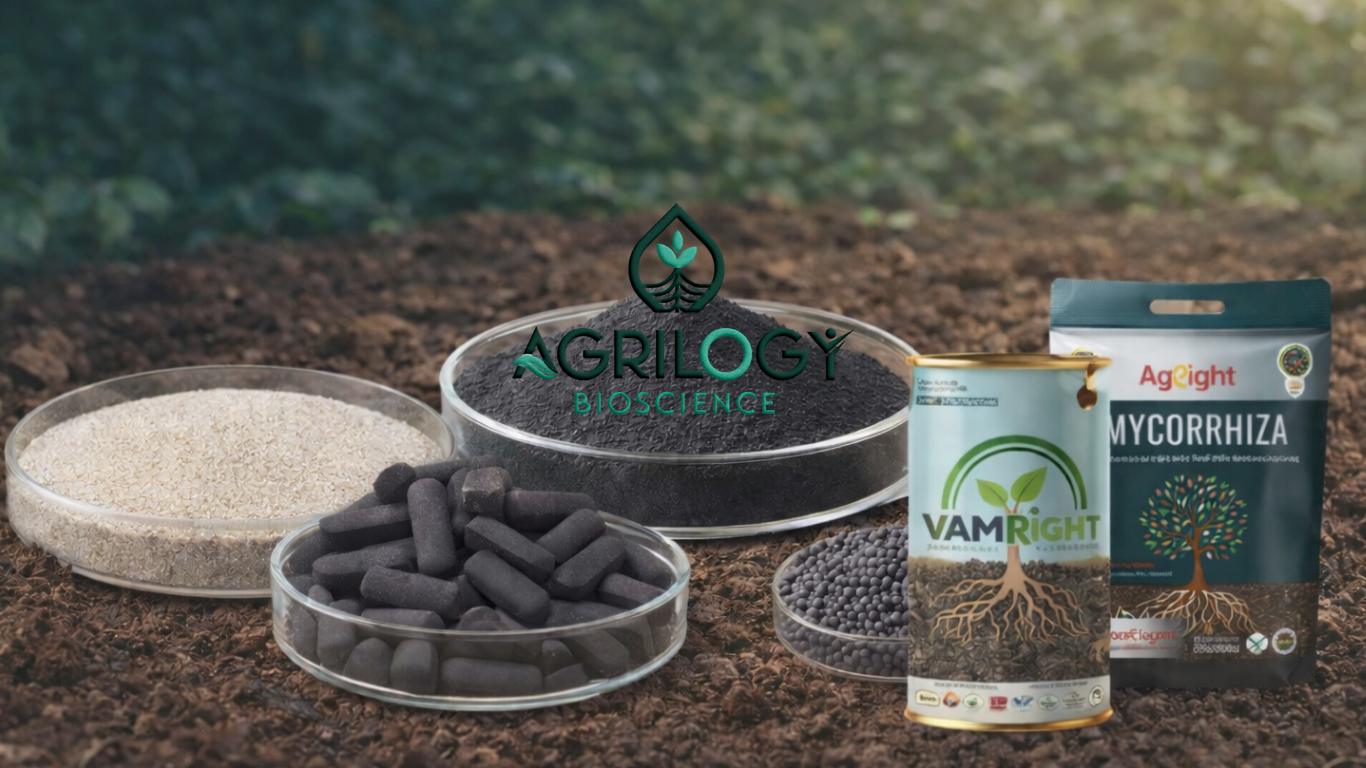
- Dextrose/Root Mass Base: The carrier of choice for high-concentration technical products. Dextrose isn’t just a powder—it’s a hygroscopic buffer that maintains spore dormancy and prevents premature activation during storage. Used in B2B blending, it ensures that when the product is finally used, the spores are as viable as the day they were packaged.
- Talc-Based Carriers: Excellent for flowability and seed coating, talc helps in even distribution. But alone, it’s passive. That’s why in advanced formulations, talc is often combined with humates or organic nutrients to create a microenvironment that supports the spore immediately upon hydration.
- Humic Acid Base: This is where carriers transition from passive to active. Humic substances chelate nutrients, improve soil structure, and stimulate root exudates—effectively preparing the soil to “welcome” the mycorrhiza. A spore delivered in a humic carrier has a higher chance of germination and colonization because its environment is already primed for success.
- Granular Organic Carriers (Manure/Compost): These provide a slow-release launchpad. As the granule breaks down, it releases the inoculant gradually into the rhizosphere alongside organic matter, mimicking a natural, nutrient-rich fungal habitat.
Decoding High-Quality Agrilogy Bioscience`s Mycorrhiza Technical Specifications: It’s Not Just About Spores/Gram
Yes, spore count matters—it’s the density of potential. But viability percentage matters just as much. A product with 50,000 spores/gm and 95% viability is far superior to one with 1,00,000 spores/gm and 40% viability.
This understanding is why high-quality Glomus-based Agright VAM technicals are strategically tiered.
At the pinnacle is the Research or Elite Grade, featuring ultra-high concentrations of around 1,00,000 spores/gram in a dextrose or rootmass base, designed for premium blends, seed treatment concentrates, and critical R&D work.
For large-scale commercial production, the Manufacturing Grade offers a robust balance, with spore counts ranging from 33,000 to 45,000 per gram in a similar dextrose carrier, optimized for cost-effective B2B manufacturing of biofertilizers and custom mixes.
Finally, for direct on-farm use, the Field Application Grade is formulated for practicality, offering spore counts between 2,500 and 10,000 per gram in a talc or humic-acid base, creating ready-to-use products that are easy for farmers to apply to soil or seed.
Each tier serves a distinct purpose in the chain from lab to land.
For direct field use, formulation is simplified for ease but still precision-engineered:
- 2500 spores/gm: 50-100 gms/acre
- 500 spores/gm: 150-300 gms/acre
The lower the spore concentration in the end product, the more critical the carrier’s role in protecting each spore and enhancing its establishment.
Why This Technical Precision Is Non-Negotiable?
Choosing a VAM product based on concept alone is a gamble. Choosing based on formulation science is an investment. Here’s what integrity in formulation ensures:
- Shelf-Life Stability: Spores remain dormant and viable for 18-24 months.
- Compatibility: The formulation does not antagonize common fertilizers or biostimulants in tank mixes.
- Soil Survivability: Carriers can include root exudate stimulants or microbial protectants that help spores outcompete native soil microbes.
- Colonization Speed: Enhanced formulations can reduce the colonization timeline from 4-6 weeks to 2-3 weeks—a critical factor in short-cycle crops.
The Essential Truth: VAM's Success is Engineered, Not Guaranteed
Endomycorrhiza isn’t magic—it’s living technology. While VAM holds the natural promise of better nutrient uptake and soil health, that potential only becomes real crop performance through smart engineering.
Success depends on precise formulation: the right carrier, protected spore viability, and a recipe that supports life from the bag to the soil.
For farmers and agronomists, this means looking beyond the spore count.
- Ask how the product is made.
- Demand details on the carrier,
- Proof of viability, and
- Clear application guidelines.
In biological agriculture, what surrounds the spore matters as much as the spore itself.
At Agrilogy Bioscience, we engineer VAM to perform. With years of R&D, our formulations ensure shelf-stable, field-ready mycorrhiza that delivers on nature’s promise—reliably. Let’s match the right formulation to your fields.